

<?xml version="1.0" encoding="UTF-8"?>
<rss version="2.0"
	xmlns:content="http://purl.org/rss/1.0/modules/content/"
	xmlns:wfw="http://wellformedweb.org/CommentAPI/"
	xmlns:dc="http://purl.org/dc/elements/1.1/"
	xmlns:atom="http://www.w3.org/2005/Atom"
	xmlns:sy="http://purl.org/rss/1.0/modules/syndication/"
	xmlns:slash="http://purl.org/rss/1.0/modules/slash/"
	>

<channel>
	<title>Irish Echo</title>
	<atom:link href="http://irishecho.com/?feed=rss2" rel="self" type="application/rss+xml" />
	<link>http://irishecho.com</link>
	<description>Just another WordPress weblog</description>
	<lastBuildDate>Tue, 07 Sep 2010 20:52:01 +0000</lastBuildDate>
	<language>en</language>
	<sy:updatePeriod>hourly</sy:updatePeriod>
	<sy:updateFrequency>1</sy:updateFrequency>
	<generator>http://wordpress.org/?v=3.0</generator>
		<item>
		<title>Nun killed, priest injured</title>
		<link>http://irishecho.com/?p=21447</link>
		<comments>http://irishecho.com/?p=21447#comments</comments>
		<pubDate>Tue, 07 Sep 2010 20:52:01 +0000</pubDate>
		<dc:creator>admin</dc:creator>
				<category><![CDATA[IE]]></category>

		<guid isPermaLink="false">http://irishecho.com/?p=21447</guid>
		<description><![CDATA[Longford-born Msgr. John Sheridan, 95, is in a critical but stable condition at UCLA Medical Center in Los Angeles after a car crash in which a 74-year-old Kiltimagh, Co. Mayo nun, Sr. Mary Campbell, was killed. Also critically injured was the driver of the car in the single vehicle accident, Douglas Kmiec, a law professor [...]]]></description>
			<content:encoded><![CDATA[<p>Longford-born Msgr. John Sheridan, 95, is in a critical but stable condition at UCLA Medical Center in Los Angeles after a car crash in which a 74-year-old Kiltimagh, Co. Mayo nun, Sr. Mary Campbell, was killed.</p>
<p>Also critically injured was the driver of the car in the single vehicle accident, Douglas Kmiec, a law professor at Pepperdine University who is the current U.S. Ambassador to Malta. The vehicle left the road and plunged into a drainage ditch.</p>
<p>Campbell was a member of the Sisters of St. Louis. The three had been at a Mass and luncheon to celebrate the 60th anniversary of the congregation&#8217;s presence in the United States.</p>
<p>Sheridan is an uncle of well-known New York radio producer Áine  Sheridan. He was featured in a November 2007 issue of the Echo after his  church, Our Lady of Malibu, narrowly escaped a spate of wildfires.</p>
]]></content:encoded>
			<wfw:commentRss>http://irishecho.com/?feed=rss2&amp;p=21447</wfw:commentRss>
		<slash:comments>0</slash:comments>
		</item>
		<item>
		<title>Irish at forefront of Hawaii&#8217;s language revival</title>
		<link>http://irishecho.com/?p=21408</link>
		<comments>http://irishecho.com/?p=21408#comments</comments>
		<pubDate>Fri, 03 Sep 2010 13:58:48 +0000</pubDate>
		<dc:creator>admin</dc:creator>
				<category><![CDATA[IE]]></category>

		<guid isPermaLink="false">http://irishecho.com/?p=21408</guid>
		<description><![CDATA[By Máirtín Ó Muilleoir Hilo, Hi. &#8211; A hearty céad mile fáilte wasn&#8217;t what the Irish Echo was expecting at the Hawaiian language department of the University of Hawaii but then it&#8217;s not every day that lecturer Keola Donaghy gets to practice his Irish. A polymath who hails from Philadelphia, Keola  &#8211; bar the fluency [...]]]></description>
			<content:encoded><![CDATA[<p><em>By Máirtín Ó Muilleoir</em></p>
<p><a href="http://irishecho.com/wp-content/uploads/2010/09/Web-Keola1.jpg"><img class="aligncenter size-full wp-image-21409" title="Web-Keola" src="http://irishecho.com/wp-content/uploads/2010/09/Web-Keola1.jpg" alt="" width="600" height="370" /></a></p>
<p>Hilo, Hi. &#8211; A hearty céad mile fáilte wasn&#8217;t what the Irish Echo was expecting at the Hawaiian language department of the University of Hawaii but then it&#8217;s not every day that lecturer Keola Donaghy gets to practice his Irish.</p>
<p>A polymath who hails from Philadelphia, Keola  &#8211; bar the fluency in Hawaiian &#8211; is direct from central casting at Irish America: big guy, big smile and firm handshake.</p>
<p>&#8220;Tá fáilte romhat, is mise Keola,&#8221; he says (&#8220;You&#8217;re welcome, I&#8217;m Keola&#8221;) before reminding his visitors of his Irish Echo connection: he made the front page in 2007 after Irish customs officials controversially deported him as he entered the country to study at Cork University.</p>
<p>Since then, Donaghy, who was baptized Joseph, has completed a doctorate in New Zealand and gone on to excel as a teacher of Hawaiian. &#8220;I wanted to study in Ireland because I had attended an Irish language intensive course at Oideas Gael in Donegal in 2002 and it had really opened my eyes to my Irish ancestry and heritage,&#8221; he says. &#8220;I hadn&#8217;t left Hawaii from the age of 10 until I was 25 and didn&#8217;t have much curiosity about my Irish background though I knew my ancestors had come from Ireland &#8211; or at least three quarters of them had &#8211; hundreds of years ago. My visit to Donegal changed all that and I really looked forward to returning but the customs people had other plans.&#8221;</p>
<p>Although, questions were raised about his case in the Dáil, he never received any apology and officials appointed to carry out an inquiry did so without speaking to him.</p>
<p>Of course, all this was pre-Farmleigh and the new-found appreciation of the role of the diaspora among the great and the good in Ireland.</p>
<p>Moving from Philadelphia to Hawaii at the age of 10, the young Donaghy developed an intense interest in Hawaiian song, which in turn led him to language classes. Soon after, he volunteered to take a beginners&#8217; class in his local Hawaiian immersion school and then found himself delving deeper into the language to keep ahead of his pupils. Today, he&#8217;s a respected lecturer at the College of Hawaiian Language at the University of Hawaii&#8217;s Hilo, Big Island, Campus. And his Irish ain&#8217;t bad either.</p>
<p>However, he&#8217;s not the only member of the faculty who can boast of Irish roots.</p>
<p>Professor Kalena Silva, director of the College and a native Hawaiian, also has Irish blood. One of his forebears was a McCandless, Scots-Irish who came to Hawaii from West Virginia in the mid-19th century and whose extensive ranches continue to leave their mark on the archipelago.</p>
<p>Today, Professor Silva is one of 10,000 speakers of Hawaiian from a native population of 250,000 on the islands (from a total population of 1.2 million) and a leading proponent of efforts to restore the language&#8217;s fortunes. In the mid-70s, what was once the official language of the nation-state of Hawaii &#8211; overthrown by US businessmen in 1893 &#8211; was at death&#8217;s door. &#8220;Only 35 people under 30 spoke Hawaiian by 1973,&#8221; he says. &#8220;Today, of the 10,000 native speakers, the majority are under 30.&#8221;</p>
<p>Kick-starting the language revival &#8211; and today Hawaii is the only state in the Union which has an official language as well as English &#8211; was the civil rights fervor sweeping the globe in the sixties. &#8220;Our people came together in the sixties and realized that if they didn&#8217;t do something the language would be lost forever,&#8221; says Dr Silva. &#8220;This coincided with a rekindling of interest in all things Hawaiian such as the hula dance, celestial seafaring (the first Hawaiians had travelled over 1,000 miles in canoes to their new home, using the stars to navigate) and music.&#8221;</p>
<p>This Hawaiian renaissance was underpinned by the immersion school movement, Aha Púnana Leo, which was launched in 1985. Today over 2,000 pupils, ranging from preschool to high school, are on the rolls across 11 sites.</p>
<p>While his peers were turning their backs on their native tongue, the teenage Kalena Silva was beating a path to his grandmother&#8217;s door to beg her to teach him Hawaiian. &#8220;Though my grandparents spoke Hawaiian, they didn&#8217;t pass the language onto my father as it was looked down upon. But my grandmother agreed to speak the language to me, though many times I was asked by family and friends, &#8216;why are you learning Hawaiian?&#8217;&#8221;</p>
<p>Today, Professor Silva is respected both at home and abroad as an authority on Hawaiian but his love of language extends far beyond the classroom. &#8220;For me, my language is everything,&#8221; he says. &#8220;It is my connection to this land, the breath of life which defines me emotionally, physically and psychologically. If I didn&#8217;t have my language, I wouldn&#8217;t know who I was.&#8221;</p>
<p>Under Professor Silva&#8217;s tutelage, the College of Hawaiian Language has scored many firsts. It is the first Native American language college in the U.S. and its MA in Hawaiian language and literature is the first MA in a specific Native American language.</p>
<p>As he readies himself for an overnight long-haul flight to attend a conference on endangered languages in Norway, the Hawaiian scholar has much to be proud of. &#8220;In the seventies, eighties and nineties, some people thought we could have a renaissance of Hawaiian culture without the language but that is changing now. The language is the fiber which binds us to our cultural identity.&#8221;</p>
<p><em>[PHOTO: Academics Keola Donaghy and Kalena Silva.]</em></p>
]]></content:encoded>
			<wfw:commentRss>http://irishecho.com/?feed=rss2&amp;p=21408</wfw:commentRss>
		<slash:comments>0</slash:comments>
		</item>
		<item>
		<title>Saving schools</title>
		<link>http://irishecho.com/?p=21433</link>
		<comments>http://irishecho.com/?p=21433#comments</comments>
		<pubDate>Thu, 02 Sep 2010 13:22:57 +0000</pubDate>
		<dc:creator>admin</dc:creator>
				<category><![CDATA[Editorial]]></category>

		<guid isPermaLink="false">http://irishecho.com/?p=21433</guid>
		<description><![CDATA[It&#8217;s back to school season, although increasingly teachers and students don&#8217;t cut their ties over the long summer break. There are those, too, who in a sense have never left school. The Echo has reported separately in recent months about three such people who&#8217;ve who retained close attachments to and indeed love for their alma [...]]]></description>
			<content:encoded><![CDATA[<p>It&#8217;s back to school season, although increasingly teachers and students don&#8217;t cut their ties over the long summer break. There are those, too, who in a sense have never left school. The Echo has reported separately in recent months about three such people who&#8217;ve who retained close attachments to and indeed love for their alma maters in the Catholic system.</p>
<p>Dan Butler spearheads St. Luke&#8217;s Education Foundation, which supports a South Bronx elementary school that will celebrate its centenary on Oct. 2</p>
<p>Mary O&#8217;Hara, a career teacher in the public system, was one of an army of alumnae of St. Michael Academy that devoted their free time over the years to raising cash as well as recruiting students to the school on West 33rd Street in Manhattan.</p>
<p>J.R. McCarthy (who has written on an unrelated topic in the current issue) established this year with others the Bill Clark Foundation, in honor of a late friend. They finance scholarships to Catholic high schools in the Bronx.</p>
<p>That trio graduated in the 1950s, 1960s and 1970s respectively, and yet continue to celebrate the schools and the system that helped mold them (and in McCarthy&#8217;s case, the system he once worked in). They proclaim the value of a Catholic education, and believe in many individual cases it means the difference in a young person&#8217;s life, particularly if he or she is from an economically underprivileged background.</p>
<p>Sometimes, alas, the value of that work hasn&#8217;t been properly recognized and honored. We speak of St. Michael Academy in the past tense as that institution was officially closed a couple of months back, with no advance notice to the interested parties. The hurt caused to O&#8217;Hara and her colleagues, women who had gone on to the careers in the professions, was considerable. They still hope that they can one day help reopen the school.</p>
<p>The SMA alumnae said that it was clear in retrospect that the there had been a plan to wind down the successful school because of its desirable real estate location on the gentrifying West Side. Then came news that the space was to be leased to a nearby public school for seven years.  Negotiations for such an arrangement would have taken some time, the alumnae say, and that underlines the secrecy and overall lack of consultation involved in the closure process. Given those circumstances, we may assume that Archbishop Timothy Dolan, who has brought a new vigor and charisma to his role as head of the church in New York, was not party to the decision (which officially is a local one anyway). However, the announcement coincided with his outlining his approach on the issue of the &#8220;consolidation&#8221; of Catholic schools in a speech to the Manhattan Institute, the conservative think tank, which was adapted as a column published simultaneously in the Daily News and New York Post on May 9</p>
<p>&#8220;We can&#8217;t do it from the top down,&#8221; the archbishop said. &#8220;We have got to collaborate with our stakeholders &#8211; our parents, our pastors, our principals, our parishioners, our civic leaders, our benefactors and our business leaders.&#8221;</p>
<p>This is precisely the opposite of what happened in the case of SMA. Indeed, just about every element of the blueprint outlined in the column was the opposite in spirit to the approach taken with the West Side school.</p>
<p>Dolan began his piece with a dose of reality. He stated that the &#8220;Catholic schools around the country and New York City are in trouble.&#8221;</p>
<p>He then demonstrated with statistics just how important the schools remain and the extent of their reach &#8211; 150,000 students from the college down to the elementary level are under the system&#8217;s umbrella in the archdiocese.</p>
<p>And then Dolan boldly rejected the &#8220;hospice mentality&#8221; of some of his colleagues that says Catholic schools are gradually dying.</p>
<p>However, if the archbishop is to have even a modicum of success with his plan for the schools, he must reject the secretive and authoritarian approaches of the past, and instead adhere closely to the spirit of his May 9 column.</p>
]]></content:encoded>
			<wfw:commentRss>http://irishecho.com/?feed=rss2&amp;p=21433</wfw:commentRss>
		<slash:comments>0</slash:comments>
		</item>
		<item>
		<title>Jesuit believes CIA files can unlock 27-year mystery</title>
		<link>http://irishecho.com/?p=21422</link>
		<comments>http://irishecho.com/?p=21422#comments</comments>
		<pubDate>Wed, 01 Sep 2010 16:19:23 +0000</pubDate>
		<dc:creator>admin</dc:creator>
				<category><![CDATA[News & Views]]></category>

		<guid isPermaLink="false">http://irishecho.com/?p=21422</guid>
		<description><![CDATA[By Peter McDermott An American priest based in Nicaragua is asking President Obama and Democratic Party leaders to help solve a 27-year mystery &#8211; the fate of his fellow Jesuit, the Rev. James &#8220;Guadalupe&#8221; Carney. The Rev. Joseph Mulligan and Carney&#8217;s relatives believe that the blacked out pages of a 1990s Central Intelligence Agency report [...]]]></description>
			<content:encoded><![CDATA[<p><em>By Peter McDermott<br />
</em></p>
<p><em><a href="http://irishecho.com/wp-content/uploads/2010/09/Web-Mulligan1.jpg"><img class="aligncenter size-full wp-image-21427" title="Web-Mulligan" src="http://irishecho.com/wp-content/uploads/2010/09/Web-Mulligan1.jpg" alt="" width="600" height="368" /></a><br />
</em></p>
<p>An American priest based in Nicaragua is asking President Obama and Democratic Party leaders to help solve a 27-year mystery &#8211; the fate of his fellow Jesuit, the Rev. James &#8220;Guadalupe&#8221; Carney.</p>
<p>The Rev. Joseph Mulligan and Carney&#8217;s relatives believe that the blacked out pages of a 1990s Central Intelligence Agency report -  about its activities in Honduras in the previous decade &#8211; may well have the clues that could lead to a Christian burial for the remains of the priest.</p>
<p>The World War II veteran Carney, who was then 58, volunteered to act as a chaplain to a 93-member revolutionary group that entered Honduras from Nicaragua in 1983. None of the group survived after it encountered special units of the Honduran army. Eyewitness testimony from former members of the military suggested that key members of the group were captured, tortured and then killed, in some cases by being thrown from a helicopter.</p>
<p>As reported by the Echo in February, Mulligan asked U.S.-based supporters to contact their members of Congress to write to the president. He hoped that, with a new administration and the passage of more than 25 years, now would be an opportune time to declassify CIA documents relating to the case. On Monday, the priest wrote to Senator Chris Dodd, who has had a long-time interest in Central American affairs, requesting that he look into the 27-year-old mystery.</p>
<p>&#8220;I have become a close friend of his family, especially the Smith family of Birmingham, Mich., who have designated me as their representative in working on the case,&#8221; Mulligan said in his letter to Dodd.</p>
<p>&#8220;We Jesuits and his relatives are very interested in knowing exactly what happened to him and in having a Christian burial in Honduras, if we can ever find his remains,&#8221; he added.</p>
<p>&#8220;David Arturo Baez Cruz, a Nicaraguan who became a U.S. citizen and served for years as a Green Beret in the U.S. army before resigning and returning to Nicaragua, also entered Honduras with the same group and disappeared.</p>
<p>&#8220;In a letter of July 11, 2001 to the Information and Privacy Coordinator of the CIA, I requested 83 items of information in relation to FATHER JAMES (GUADALUPE) CARNEY and DAVID ARTURO BAEZ CRUZ which had been blacked out of the &#8216;CIA Inspector General&#8217;s Report of Investigation: Selected Issues Relating to CIA Activities in Honduras in the 1980s&#8217; (August 27, 1997).  About half of this 250-page document was blacked out before being &#8216;declassified.&#8217;</p>
<p>&#8220;The CIA gave my 2001 request the Reference Number F-2001-01650. Although I have had some correspondence with the CIA about my request, I have never received a decision on my request.</p>
<p>&#8220;Since no decision was ever made about my request, on July 31, 2009 I submitted basically the same request.&#8221;</p>
<p>&#8220;I received a reply from the CIA Information and Privacy Coordinator, Delores M. Nelson, dated 16 December 2009, acknowledging receipt of my request of July 31, 2009 and stating that they are processing it. They have given this present request the Reference Number F-2009-01688. &#8221;</p>
<p>&#8220;Ms. Nelson also stated that the CIA is continuing to process my original request of 2001 &#8211; Reference Number F-2001-01650.&#8221;</p>
<p>Mulligan added in his letter to Senator Dodd: &#8220;I would be very grateful if you would contact the CIA Director Leon Panetta in support of both of my requests. A complete declassification of the CIA Inspector General&#8217;s Report could shed light on the disappearance of these two U.S. citizens and also on important aspects of American policy in Honduras in the 1980s.&#8221;</p>
<p>The New York City-born Mulligan joined the Society of Jesus in 1963. His family had some years earlier relocated to the Detroit area. By the time of his ordination as a priest in the 1970s, he had already served two years in prison for his part in a civil disobedience action opposing the Vietnam War. He later met and befriended Carney, who had also grown up in an Irish-American family in the Midwest. The older priest was visiting his family on a trip back home from Honduras, where he had lived since 1961.</p>
<p>Carney was expelled from the Central American country in 1979, just as the Sandinista revolution was taking place in neighboring Nicaragua.  Mulligan, who moved to that country in 1986, said that Carney was inspired by the revolution and thought the time was right for something similar to happen in Honduras.</p>
<p>In &#8220;To Be a Christian Is&#8230;To Be a Revolutionary,&#8221; an autobiography published after his disappearance, Carney wrote: &#8220;Why are the campesinos so poor in this rich valley? They are farmers who do not have any land! We rebel against that, even if they call us communists, even if they kill us. We have to wake our people up, tell them to get organized, help them to change the situation.&#8221;</p>
<p>He said that he saw himself as no different from any other type of chaplain in the world&#8217;s armies.</p>
<p>Carney&#8217;s decision to join the revolutionary group, however, was at odds with the Jesuits&#8217; mission in Central America. He accepted that, and resigned, though he remained a priest.</p>
<p>Mulligan said that if Carney and Baez Cruz were captured, it seems likely that the Honduran military would have contacted U.S. embassy or intelligence personnel. Family members and human rights activists have wondered if the men were tortured, killed and &#8220;disappeared&#8221; after a &#8220;wink of approval&#8221; from the Americans.</p>
<p>&#8220;The issue is the treatment of prisoners of war,&#8221; Mulligan said.</p>
<p>Three sources have since indicated that Carney was indeed tortured and killed. Florencio Caballero, an army officer in the counterinsurgency Battalion 3-16 who deserted in 1986, said in interviews with members of the Carney family and the New York Times that the priest was taken to a military base operated by the CIA inside Honduras as part of its war against the Sandinista government in Nicaragua. According one summary of the testimony from Caballero, who was granted asylum and has since died in Canada, &#8220;execution orders came from the commander of the Honduran Armed Forces, Gen. Gustavo Álvarez Martínez, in the presence of a CIA officer, and &#8230; Carney was subsequently tortured and thrown alive out of a helicopter over the Honduran jungle.&#8221;</p>
<p>A second source, Lucas Aguilera of the Christian Democrat Party, gave a sworn court statement to the effect that he had seen Carney alive in military detention in Olancho. Finally, Eric Haney, a U.S. Army Delta Force member who said he was involved in the Olancho operation, claimed in radio interviews that a CIA agent told him that Carney was &#8220;brutalized prior to his death, that the marks that were on his body had to have been inflicted while he was still alive.&#8221;</p>
<p>[Fr. Joseph Mulligan pictured in a study at the Jesuits' residence in Managua. PHOTO BY PETER MCDERMOTT]</p>
]]></content:encoded>
			<wfw:commentRss>http://irishecho.com/?feed=rss2&amp;p=21422</wfw:commentRss>
		<slash:comments>0</slash:comments>
		</item>
		<item>
		<title>Aegis founder Spicer has not left the building</title>
		<link>http://irishecho.com/?p=21429</link>
		<comments>http://irishecho.com/?p=21429#comments</comments>
		<pubDate>Wed, 01 Sep 2010 16:17:57 +0000</pubDate>
		<dc:creator>admin</dc:creator>
				<category><![CDATA[News & Views]]></category>

		<guid isPermaLink="false">http://irishecho.com/?p=21429</guid>
		<description><![CDATA[By Susan Falvella Garraty Earlier this month, Aegis Defense Services set up a non-operating holding company in Basel, Switzerland. Aegis has an estimated 20,000 employees involved in private security efforts around the world; it formed the new holding company in the neutral European nation&#8217;s more hospitable tax environment. Several media reports indicated Tim Spicer, the [...]]]></description>
			<content:encoded><![CDATA[<p><em>By Susan Falvella Garraty</em></p>
<p><a href="http://irishecho.com/wp-content/uploads/2010/09/Web-hearing.jpg"><img class="aligncenter size-full wp-image-21430" title="Web-hearing" src="http://irishecho.com/wp-content/uploads/2010/09/Web-hearing.jpg" alt="" width="600" height="354" /></a></p>
<p>Earlier this month, Aegis Defense Services set up a non-operating holding company in Basel, Switzerland. Aegis has an estimated 20,000 employees involved in private security efforts around the world; it formed the new holding company in the neutral European nation&#8217;s more hospitable tax environment.</p>
<p>Several media reports indicated Tim Spicer, the controversial founder of Aegis, was leaving the company after its move out of the United Kingdom.</p>
<p>&#8220;He has most definitely not left Aegis,&#8221; responded Sara Pearson, publicist for Aegis, when asked if Spicer had left the company.</p>
<p>Spicer is, according to Pearson, the Group Chief Executive and Director of Global Operations.</p>
<p>That has the Swiss government a little nervous.</p>
<p>Swiss Foreign Minister Micheline Calmy-Rey, said in a radio interview this week that private military firms must respect international humanitarian law and human rights, and following Aegis&#8217; move to Basel, commissioned an investigation into how the presence of such a security firm might impact the perception Swiss military neutrality around the world.</p>
<p>&#8220;The Swiss have every reason to be nervous,&#8221; says Fr. Sean McManus, the president of the Irish National Caucus.</p>
<p>Contacted while he was home in Fermanagh for the summer holidays, McManus says wherever Spicer goes, trouble follows.</p>
<p>In 1992, two members of the Scots Guards killed an unarmed teen named Peter McBride. Tim Spicer defended the men that shot Peter McBride in the back and who were later found guilty of murder. Their murder conviction has never been overturned, but the pair were allowed to return to active duty after their release under the terms of the Good Friday Accord.</p>
<p>Spicer was then involved in arms for hire controversies in Papua New Guinea and Sierra Leone. In 2004, Spicer and Aegis received one of the largest security contracts from the US government for more than 293 million dollars.</p>
<p>Then senator Hillary Rodham Clinton joined other senators including Edward Kennedy (D-MA,) Charles Schumer(D-NY,) and Christopher Dodd (D-CT,) in protesting the awarding of the contract to Aegis because of Tim Spicer&#8217;s connection to the McBride murder and other incidents. The senators sent a letter to then Secretary of Defense Donald Rumsfeld asking the contract to be rescinded.</p>
<p>When a then new senator from Illinois, Barack Obama, was apprised of the situation, he joined with those fellow Democrats in targeting the Spicer contract for removal.</p>
<p>&#8220;As you know, the CEO of Aegis Defense Services Tim Spicer has been implicated in a variety of human rights abuses around the globe.  Given his history, I agree that the United States should consider rescinding its contract with his company. Several of my colleagues have contacted the Pentagon expressing their concerns about this issue.  I will be in touch with their offices to see how I can be of assistance in their efforts&#8230;&#8221;</p>
<p>The Aegis contract was never rescinded, and the Aegis legacy of controversy continued when in 2005 there emerged &#8220;Trophy Videos&#8221; of Aegis employees allegedly shooting arbitrary civilians in Iraq.</p>
<p>Yet now under the Obama administration, Tim Spicer stands to continue to make millions of dollars in new contracts. Even as President Obama makes a prime-time speech to the nation from the Oval Office about the draw down in combat troops in Iraq, the role of private security firms becomes more prominent. The role of how the US will bolster security in Iraq and Afghanistan will become more in the hands of Secretary of State Hillary Rodham Clinton.</p>
<p>Will she continue the practice of awarding Aegis and Tim Spicer more US dollars for private security services?</p>
<p>&#8220;I am a great admirer of Hillary Clinton, but I would hope that she would take a strong position and oppose the use of these soldiers of fortune,&#8221; says Fr. McManus.</p>
<p>The Echo contacted both the White House and the State Department of comment on the new Aegis contracts, but received no reply.</p>
<p>The contract, obtained by the Echo, shows Aegis charges the U.S. government any where from $500 to almost $1,200 a day for services for hundreds of their employees. The contract is good from May 2009 till May 2014.</p>
<p>Examining the whole process of military and civilian contracts for the Iraq and Afghan wars is the bipartisan Commission on Wartime Contracting. This past spring, the commissioners held hearings on Capitol Hill to investigate whether best practices were being employed as the US government paid hundreds of millions of taxpayer dollars to large and small defense and civilian contractors.</p>
<p>Professor Charles Tiefer, a law professor at the University of Maryland, is a commissioner and he had some questions for Aegis&#8217; US president, Kristi Clemens Rogers when she appeared before the commission. Tiefer asked if Tim Spicer was a mercenary.</p>
<p>Clemens did not deny that Spicer had been a mercenary, but explained repeatedly that he had only acted on behalf of &#8220;governments that were Western-allied governments.&#8221;</p>
<p>&#8220;I was less than reassured than I had hoped to be at the hearing,&#8221; explained Tiefer in a telephone interview with the Echo.</p>
<p>&#8220;Congress charged the commission to pay especially close attention to private security contractors whose work arouses more public concern than say the suppliers of bulk food or gasoline,&#8221; he added.</p>
<p>The commission already recommended that Aegis be stripped of some supervisory powers over itself and other private security contractors it had been acting upon within the Iraqi theater.</p>
<p>But will the commission be another paper tiger and cog in the bureaucratic wheel where many have circuitous relationships between government and contractors?</p>
<p>Kristi Clemens Rogers, the Aegis US president, is married to Congressman Mike Rogers (R-Mi.) She was a Homeland Security official under the Bush administration, and started out as &#8211; a contractor for her husband.</p>
<p>&#8220;We&#8217;re not doing this because we like the cafeteria food,&#8221; said Tiefer.</p>
<p>He hopes that he and his fellow commissioners will make sure precious budgetary resources are allocated fairly and to firms of integrity.</p>
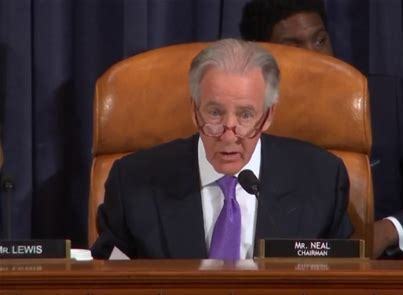
<p>[PHOTO: President of Aegis Defense, LLC, Kristi Clemens Rogers (center) testifying at the Commission on Wartime Contracting.]</p>
]]></content:encoded>
			<wfw:commentRss>http://irishecho.com/?feed=rss2&amp;p=21429</wfw:commentRss>
		<slash:comments>0</slash:comments>
		</item>
		<item>
		<title>Down break Kildare hearts,  through to Sept. 19 final</title>
		<link>http://irishecho.com/?p=21419</link>
		<comments>http://irishecho.com/?p=21419#comments</comments>
		<pubDate>Wed, 01 Sep 2010 16:05:23 +0000</pubDate>
		<dc:creator>admin</dc:creator>
				<category><![CDATA[Sport]]></category>

		<guid isPermaLink="false">http://irishecho.com/?p=21419</guid>
		<description><![CDATA[By Kieran Rooney JUST as the Dublin supporters left Croke Park devastated the week previously, Kildare fans must still be pondering about how events conspired against them last Sunday. Not that anyone should argue about the merit of Down&#8217;s performance in beating Kildare 1-16 to 1-14 in the second All-Ireland Senior Football Championship semi-final. They [...]]]></description>
			<content:encoded><![CDATA[<p>By Kieran Rooney</p>
<p><a href="http://irishecho.com/wp-content/uploads/2010/09/Web-down2.jpg"><img class="aligncenter size-full wp-image-21420" title="Web-down2" src="http://irishecho.com/wp-content/uploads/2010/09/Web-down2.jpg" alt="" width="600" height="311" /></a></p>
<p>JUST as the Dublin supporters left Croke Park devastated the week previously, Kildare fans must still be pondering about how events conspired against them last Sunday.</p>
<p>Not that anyone should argue about the merit of Down&#8217;s performance in beating Kildare 1-16 to 1-14 in the second All-Ireland Senior Football Championship semi-final. They were the better footballing outfit and are, without question, worthy of their place in the All-Ireland decider against Cork on September 19.</p>
<p>Had they been denied by an injury time free from Kildare substitute Robert Kelly which crashed off the underside of the crossbar, there would have been a huge amount of sympathy for them. Instead, much of that sympathy extends to Kildare.</p>
<p>In truth, the Lilywhites were not at their best. Missing Dermot Early, they began well and finished well but, in between, Down outscored them 1-14 to 1-7 between the 10th and 60th minutes.</p>
<p>Yet, Kildare will look back on this game and argue that virtually all of the big decisions went against them. How, for example, did the officials allowed Benny Coulter&#8217;s first half goal for Down when it was very clearly a square ball?</p>
<p>For most of the 62,182 crowd, it was a straightforward decision. But somehow the referee Pat McEnaney allowed the goal to stand after consulting his umpires.</p>
<p>Okay, in the heat of the battle McEnaney may have been unsure but the two umpires were in the perfect spot to see that Coulter was in the square long before the Martin Clarke delivery arrived. What&#8217;s beyond dispute is that Coulter&#8217;s goal gave Down exactly the boost they needed.</p>
<p>To add further to Kildare&#8217;s anger, they had earlier been deprived of what appeared to be a perfectly good point when the umpires decided that Alan Smith&#8217;s shot had gone wide. Yet, television coverage indicated that the admittedly very high shot had bisected the posts.</p>
<p>Lastly, there was a case for Kildare being awarded a penalty in a drama filled five minutes of injury time. A Down defender lay on the ball as Kildare pushed forward, but to be fair to the referee there were an an abundance of players around the incident and it was very hard, if not impossible, for the referee to have a clear view.</p>
<p>Down survived, just as they survived the injury time free from Robert Kelly.  With up to nine Down players on the goal line, the situation looked impossible but Kelly made a tremendous effort to secure the goal which would have given Kildare victory.</p>
<p>His powerful shot was only stopped from going in by Kalum King whose fingertips pushed the ball on to the crossbar. Even then, Down were fortunate to see the ball bounce off the head of another defender and be cleared.</p>
<p>Immediately the final whistle blew and the subsequent  contrasting scenes summed up what had been yet another day of high drama at Croke Park. As the Down players raced out with the hands in the air, their Kildare counterparts hung their heads in sheer dismay.</p>
<p>Understandably, the Kildare manager Kieran McGeeney was bitterly disappointed with some of the decisions. To add to his frustration, he had seen his team hit both the upright and the crossbar.</p>
<p>In fairness it should be said that the Eamonn Callaghan goal which started Kildare&#8217;s second half comeback could very easily have been disallowed for the player taking too many steps. Overall though, there&#8217;s no doubt that generally things went Down&#8217;s way.</p>
<p>To give McGeeney his due he didn&#8217;t want to take anything away from Down. He fully recognized that they produced some wonderful attacking football, and would have been desperately disappointed to have seen a seven point second half lead slip.</p>
<p>&#8220;Down were outstanding today, you just can&#8217;t take that away from them. They were mobile, very quick.&#8221; admitted McGeeney.</p>
<p>But the officials, quite predictably, were not praised in the same manner. &#8220;There are marginal calls about whether the ball was in play or it wasn&#8217;t. They watch that and they can&#8217;t tell whether the ball goes over the bar.&#8221; The Kildare boss snapped.</p>
<p>&#8220;Or they can&#8217;t tell if it was a square ball. That&#8217;s adminstration at its best. It&#8217;s a shame because you are taking away from people like Benny Coulter who shows great courage going for those type of ball, and from the workrateof Danny Hughes and Kalum King.&#8221;</p>
<p>While it&#8217;s easy to understand McGeeney&#8217;s frustration, it&#8217;s also important to state that Down deserve huge credit for getting through to their first final since 1994. They did, after all, knock out Kerry before edging past Kildare on Sunday.</p>
<p>They are a young team full of good footballers. Benny Coulter has long been recognized as one of the best forwards in the country, while the return from Australia of Martin Clarke has proved a huge bonus.</p>
<p>Both Coulter and Clarke were contenders for Man of the Match, as was wing-forward Daniel Hughes.  Remember also that Down had to line-up without Ambrose Rogers, just as Kildare had to do without Dermot Earley.</p>
<p>But it was Kildare who had much the better of the early exchanges. They led 0-3 to 0-1 after 10 minutes, in spite of kicking four wides.</p>
<p>It was then, 12 minutes after the start, that Benny Coulter scored the controversial Down goal. He did what he had to do putting the ball inso the net as the Kildare goalkeeper hesitated.</p>
<p>Down were transformed.  They scored a series of quality points, two of them coming from the increasingly impressive Martin Clarke. But even he was outdone when Coulter sent over a shot with the outside of his foot from the right touchline to leave Down 1-9 to 0-7 clear at the interval.</p>
<p>The situation was then to get even worse for Kildare at the start of the second half. After Clarke made it 1-10 to 0-7 with a free, the Leinster side suddenly engineered a chance of getting back into the game.</p>
<p>Unfortunately, John Smith&#8217;s low shot rebounded back off an upright with the goalkeeper beaten.  Down eventually move 1-14 to 0-10 clear by the 57th minute and there appears to be no way back for Kildare.</p>
<p>But then they get what was arguably their one real break of the day as Eamonn Callaghan bursts through. He rounds Brendan McVeigh in the Down goal before putting the ball into the net.</p>
<p>Suddenly, everything has changed.  Coulter kicks another Down point but the Ulster team is now feeling the pressure. Two spectacular long range points from Kildare&#8217;s Hughie Lynch means there is only a goal between the sides and the tension mounts.</p>
<p>David Lyons points in injury time to cut it back to two and the game finishes with that dramatic Kelly free which comes back off the crossbar. Despair for Kildare and complete jubilation for Down.</p>
<p>Their skipper Coulter tries to unscramble his mind. &#8220;They have a 14 yard free and I&#8217;m just thinking, we can&#8217;t lose it now. I think Kalum (King) got a touch, but we definitely weren&#8217;t letting the ball go into the net.&#8221;</p>
<p>And what of Coulter&#8217;s first half goal, should that have been allowed? &#8220;When you are on the line, you don&#8217;t see a lot of the marginal incidents. If the goal was a square-ball, we&#8217;ll take the bit of luck.&#8221; answered Down manager James McCartan.</p>
<p>Coulter, sitting beside him, could so easily have passed the buck. Instead, he smiles and,  to his credit, admits: &#8220;I think it was (a square ball), yeah.&#8221;</p>
<p>[PHOTO Down's Kalum King gets his fingertips to the ball that hit the crossbar with the last kick of the game at Croke Park. INPHO/JAMES CROMBIE]</p>
<p><strong>Minors aim for Cork double</strong></p>
<p>CORK remain on course for an All-Ireland football double following their minors exciting 3-15 to 5-8 semi-final victory over Galway on Sunday.</p>
<p>The match was only decided right at the death when Cork&#8217;s dead ball specialist Brian Hurley sent a free over the bar. His effort crowned a remarkable comeback as Cork trailed by nine points, having conceded five goals in the opening 44 minutes.</p>
<p>It was a shame that either side should have to lose a smashing match.  Galway must have thought they had it won when full-forward Conor Rabbitte scored their fifth goal to give them a 5-6 to 2-6 second half lead.</p>
<p>But Cork showed tremendous character and skill to gradually cut into Galway&#8217;s lead before Hurley secured the dramatic winning score. The Leesiders will now meet Tyrone in the All-Ireland Minor Football final.</p>
<p><strong>Hogan out, but Shefflin improves</strong></p>
<p>KILKENNY will definitely be without Brian Hogan for next Sunday&#8217;s All-Ireland Hurling final against Tippeary after sustaining a finger injury in training</p>
<p>It&#8217;s tough luck on Hogan but some better news for the reigning champions is the fact that Henry Shefflin and John Tennyson continue to improve. Shefflin, in particular, seems to be making a remarkable recovery from his cruciate knee ligament injury.</p>
<p>Meanwhile, Tippeary&#8217;s chances have been boosted by the confirmation that Brendan Maher will be firt to take his place after damaging a wrist in a training session.</p>
<p>Elsewhere, Seamus McEnaney&#8217;s reign as the Monagahan football manager has ended. His departure follows a campaign which promised a lot but ended on a disappointing note following defeats by Tyrone in the Ulster final and Kildare in the All-Ireland qualifiers.</p>
<p><strong>Trapp will miss Andrews</strong></p>
<p>THE Republic of Ireland soccer team must do without the Blackburn Rovers midfielder Keith Andrews for their opening European Championship qualifiers against Armenia and Andorra.</p>
<p>Andrews has to remain at his club for treatment on the groin strain, which caused him to miss Saturday&#8217;s 2-1 home defeat by Arsenal.</p>
<p>Coach Giovanni Trapattoni may now look to either Paul Green of Derby County or Manchester United&#8217;s Darron Gibson.</p>
]]></content:encoded>
			<wfw:commentRss>http://irishecho.com/?feed=rss2&amp;p=21419</wfw:commentRss>
		<slash:comments>0</slash:comments>
		</item>
		<item>
		<title>The many musical sides of Martin Mulhaire</title>
		<link>http://irishecho.com/?p=21398</link>
		<comments>http://irishecho.com/?p=21398#comments</comments>
		<pubDate>Wed, 01 Sep 2010 15:40:06 +0000</pubDate>
		<dc:creator>admin</dc:creator>
				<category><![CDATA[Arts & Leisure]]></category>

		<guid isPermaLink="false">http://irishecho.com/?p=21398</guid>
		<description><![CDATA[By Earle Hitchner Soft-spoken and unpretentious, composer and button accordionist Martin Mulhaire is a consummate gentleman who shuns the spotlight. He also happens to be one of the most gifted, knowledgeable, thoughtful, perceptive, tasteful, open-minded, and fascinating musicians I&#8217;ve ever met. Ezra Pound urged poets to &#8220;make it new.&#8221; Martin Mulhaire, who&#8217;s from Eyrecourt, East [...]]]></description>
			<content:encoded><![CDATA[<p><em>By Earle Hitchner</em></p>
<p><a href="http://irishecho.com/wp-content/uploads/2010/09/Web-Mulhaire.jpg"><img class="aligncenter size-full wp-image-21399" title="Web-Mulhaire" src="http://irishecho.com/wp-content/uploads/2010/09/Web-Mulhaire.jpg" alt="" width="600" height="362" /></a></p>
<p>Soft-spoken and unpretentious, composer and button accordionist Martin Mulhaire is a consummate gentleman who shuns the spotlight. He also happens to be one of the most gifted, knowledgeable, thoughtful, perceptive, tasteful, open-minded, and fascinating musicians I&#8217;ve ever met.</p>
<p>Ezra Pound urged poets to &#8220;make it new.&#8221; Martin Mulhaire, who&#8217;s from Eyrecourt, East Galway, and resides in Pearl River, N.Y., did the opposite: he wrote tunes that wound up sounding magnificently old. And in doing so, he made them eternally fresh.</p>
<p>One test of a great new melody in Irish traditional music is whether it&#8217;s often presupposed a timeless classic. The tune is so beautifully structured, so appealing, so &#8220;right&#8221; that it simply must be from a master composer whose namelessness testifies to the tune&#8217;s age. At least, that&#8217;s the assumption, which was probably held by flutist Matt Molloy, fiddler Sean Keane, and guitarist Arty McGlynn when they recorded &#8220;The Golden Keyboard&#8221; reel on their brilliant 1985 album, &#8220;Contentment Is Wealth.&#8221; The tune, like every other on the release, carries no composer credit.</p>
<p>Martin Mulhaire wrote &#8220;The Golden Keyboard,&#8221; and musicians such as Joe Derrane, Bobby Gardiner, John Regan, Noel Hill and Tony Linnane, Kevin Henry, and Trian have also recorded it. In 1960 at Fleadh Cheoil na hEireann in Boyle, Roscommon, the New York Ceili Band performed it in competition. It was ironic that they used a tune by a former musician in the ceili band who won the coveted senior title that year: the Tulla.</p>
<p>&#8220;I was just looking for a name, a flashy title that could be easily remembered,&#8221; Mulhaire said of &#8220;The Golden Keyboard.&#8221; He obviously succeeded.</p>
<p>&#8220;I was always worried about composing tunes that I might have heard by someone else,&#8221; admitted 72-year-old Martin Mulhaire, a retired carpenter, about the approximately 20 enduring melodies he&#8217;s written. &#8220;You&#8217;re always influenced by whom you hear. I&#8217;ve been lucky that my own tunes have been well received and don&#8217;t sound as if they were written by the same person.&#8221;</p>
<p>Regarding the anonymity he often encountered as a composer, Mulhaire was philosophical. &#8220;In the beginning it didn&#8217;t bother me much because I wasn&#8217;t willing to confess that I had written the tunes. I wasn&#8217;t sure how good they were.&#8221;</p>
<p>Other musicians quickly applied the seal of excellence. Well over 70 albums feature one or more Mulhaire tunes. They include such bona fide classics as &#8220;Carmel Mahoney Mulhaire&#8221; (named after his Portumna wife of 52 years), &#8220;Grandpa Tommy&#8217;s Ceili Band&#8221; (named after his father), &#8220;The Old Thatched House&#8221; (the first tune he ever wrote), &#8220;Farewell to Eyrecourt&#8221; (covered most recently by the Kane Sisters on their &#8220;Side by Side&#8221; album), and &#8220;Mulhaire&#8217;s #9&#8243; (played by Billy McComiskey on the 2009 album &#8220;Pride of New York&#8221;). Several Mulhaire tunes were also recorded by him with fiddler Seamus Connolly, flutist Jack Coen, and pianist Felix Dolan on &#8220;Warming Up,&#8221; their splendid 1993 album.</p>
<p>&#8220;I guess my being a composer has eclipsed my being a button accordionist now,&#8221; Mulhaire confessed to me. But that statement should be taken with a full shaker of salt.</p>
<p>He won an All-Ireland junior button accordion championship and, with his brother Brendan and father Tommy, an All-Ireland senior trio title. Martin&#8217;s skill as a button accordionist is apparent not only on the album &#8220;Warming Up&#8221; but also on &#8220;Fathers and Daughters&#8221; in 1986; on the greatest ceili band recording ever made, &#8220;Echoes of Erin,&#8221; by the Tulla Ceili Band in 1958; and on the deft but regrettably overlooked solo 78-rpm recordings he made shortly after &#8220;Echoes of Erin.&#8221; In addition, Mulhaire made recordings, seemingly lost now, for Ireland&#8217;s Gael-Linn label when he was about 16 years old.</p>
<p>Taken together, the extant recordings are impressive proof of his box-playing expertise over the years. On &#8220;Echoes of Erin,&#8221; for example, Mulhaire is accorded the sole solo track, &#8220;Cottage Groves / The Sally Gardens.&#8221; What&#8217;s obvious is that he is among the most accomplished button accordionists in the history of Irish traditional music.</p>
<p>What&#8217;s less obvious to traditional music buffs is his keen interest in the guitar. For many years Mulhaire was the lead electric guitarist in New York&#8217;s Majestic Showband, which he formed with Mattie Connolly, who also played electric guitar in the group but is more familiar to trad fans as a superb uilleann piper. In the U.S., where Martin remained after the Tulla Ceili Band&#8217;s tour in 1958, he bought an acoustic guitar, a Gibson J-200, and a chord book and began learning to play his new instrument.</p>
<p>Guitarists who influenced his playing include Newcastle-born Hank Marvin, possessing a distinctive twanging rock style in the Shadows, a band that also backed British teen idol Cliff Richard. &#8220;The Shadows&#8217; number one hit in 1960 was &#8216;Apache,&#8217; and it was pure Hank Marvin,&#8221; Mulhaire recalled fondly.</p>
<p>He also listened intently to such guitarists as Buck Owens and the Buckaroos&#8217; Don Rich, Nashville session master Hank Garland, Chet Atkins, former Elvis Presley Band and Emmylou Harris&#8217;s Hot Band member James Burton (&#8220;I bought a Telecaster after I saw him perform live,&#8221; Mulhaire said), Chuck Berry, Jeff Beck, Eric Clapton, B. B. King (&#8220;I saw him play in an open-air concert in New York City,&#8221; Mulhaire said), the Allman Brothers&#8217; Dickey Betts, the Grateful Dead&#8217;s Jerry Garcia, and Dire Straits&#8217; Mark Knopfler.</p>
<p>&#8220;A lot of people don&#8217;t believe me when I tell them that I saw a lot of these guitarists live,&#8221; Mulhaire added. &#8220;But I also never broadcast to traditional players that I was interested in that stuff. I was undercover.&#8221;</p>
<p>In May 1997 at Wolf Trap in Vienna, Va., the Tulla Ceili Band, who celebrated their golden anniversary the previous year, invited former members Martin Mulhaire and Mike Preston to join the ensemble at the Irish Folk Festival. Tulla fiddler Martin Hayes and Martin Mulhaire happened to be sitting near each other on a shuttle bus at the festival when Mulhaire mentioned that he liked the Allman Brothers. Hayes, perhaps undercover himself, replied, &#8220;I love the Allman Brothers.&#8221; He was as interested in rock and other genres of music as Mulhaire was. &#8220;We had a common ground that we never had before,&#8221; Mulhaire said.</p>
<p>The guitar gods truly smiled on Martin Mulhaire one day during the 1960s in New York City for what can be called his Jimi Hendrix Experience.</p>
<p>&#8220;I was in Manny&#8217;s Music Store, where I used to stop after work to see what was new in guitars, and I saw this guy in the corner with a big hat or sombrero with bells along the side of it, a leather jacket, and leather pants even though it was 90 degrees outside at the time,&#8221; Mulhaire recalled. &#8220;He was talking about guitars with Henry, who owned Manny&#8217;s, and he asked Henry to see a Stratocaster. He gets the Stratocaster, plugs in, and plays about five or six licks on it. It was unbelievable playing even when he was just tuning up. He had such command of the instrument. I knew who he was, and so I went up to talk with him for a couple of minutes. He gave me his autograph, which I later lost. I thought he was going to play some more, but he said, &#8216;I&#8217;m not going to play any more now. Concert&#8217;s over.&#8217; Then he said to Henry, &#8216;Okay, I&#8217;ll take six of them.&#8217; Jimi Hendrix walked out with a load of guitars.&#8221;</p>
<p>Scratch a trad player or critic, and who knows what else musically lies underneath. I told Martin Mulhaire about seeing by chance Altan&#8217;s Frankie Kennedy and Mairead Ni Mhaonaigh at a concert by one of my favorite electric guitarists, Roy Buchanan, at the Bottom Line in Greenwich Village. I also confessed to Martin that, to my ears, the closest an electric guitar ever came to crying on a studio recording was Roy Buchanan&#8217;s Telecaster tour de force in &#8220;Wayfairing Pilgrim&#8221; on his 1974 album &#8220;In the Beginning.&#8221; Martin understood exactly what I meant.</p>
<p>For the past decade he has been playing button accordion in the popular Pete Kelly Premier Ceili Band. &#8220;Some people go bowling; I go play ceilidhs,&#8221; Martin said. &#8220;We average 14 sets a night, which is five figures in each set. I kept track one evening: I played 120 tunes during a ceilidh. Playing an electric guitar is easy compared to that, although I&#8217;d probably get calluses in two minutes on the guitar now.&#8221;</p>
<p>Don&#8217;t believe it. I&#8217;d bet all my Roy Buchanan albums that Martin Mulhaire can still rock.</p>
]]></content:encoded>
			<wfw:commentRss>http://irishecho.com/?feed=rss2&amp;p=21398</wfw:commentRss>
		<slash:comments>0</slash:comments>
		</item>
		<item>
		<title></title>
		<link>http://irishecho.com/?p=18901</link>
		<comments>http://irishecho.com/?p=18901#comments</comments>
		<pubDate>Fri, 27 Aug 2010 14:15:17 +0000</pubDate>
		<dc:creator>admin</dc:creator>
				<category><![CDATA[IE]]></category>

		<guid isPermaLink="false">http://irishecho.com/?p=18901</guid>
		<description><![CDATA[Archive]]></description>
			<content:encoded><![CDATA[<p>Archive</p>
]]></content:encoded>
			<wfw:commentRss>http://irishecho.com/?feed=rss2&amp;p=18901</wfw:commentRss>
		<slash:comments>0</slash:comments>
		</item>
		<item>
		<title>First Report of the Independent Monitoring Commission on paramilitary violence in Northern Ireland</title>
		<link>http://irishecho.com/?p=18900</link>
		<comments>http://irishecho.com/?p=18900#comments</comments>
		<pubDate>Fri, 27 Aug 2010 14:15:17 +0000</pubDate>
		<dc:creator>admin</dc:creator>
				<category><![CDATA[IE]]></category>

		<guid isPermaLink="false">http://irishecho.com/?p=18900</guid>
		<description><![CDATA[CONTENTS (the report is 67 pages long and may also be downloaded at the Commission&#8217;s web site, www.independentmonitoringcommission.org). 1. Introduction and context. 2. Scope of the Report 3. Paramilitary groups ? organisation and assessment of current activities 4. The incidence of violence by paramilitary groups 5. Incident in Belfast on 20 February 2004 6. Paramilitary [...]]]></description>
			<content:encoded><![CDATA[<p>CONTENTS (the report is 67 pages long and may also be downloaded at the Commission&#8217;s web site, www.independentmonitoringcommission.org).</p>
<p>1. Introduction and context.</p>
<p>2. Scope of the Report</p>
<p>3. Paramilitary groups ? organisation and assessment of current activities</p>
<p>4. The incidence of violence by paramilitary groups</p>
<p>5. Incident in Belfast on 20 February 2004</p>
<p>6. Paramilitary groups ? non-terrorist crime, funding and local control</p>
<p>7. Leadership of paramilitary groups</p>
<p>8. Conclusions and recommendations</p>
<p> ANNEXES</p>
<p> I. Articles 4 and 7 of the International Agreement</p>
<p> II. IMC Statement issued on 9 March 2004</p>
<p> III. Summary of measures the IMC can recommend for action by the Northern Ireland Assembly</p>
<p> 1.	INTRODUCTION AND CONTEXT</p>
<p>1.1 We submit this report under Articles 4 and 7 of the International Agreement establishing the Independent Monitoring Commission.  Article 4 directs us to look at the continuing activities of paramilitary groups.  Article 7 allows us when reporting under Article 4 to recommend any remedial action we consider necessary or measures we consider might appropriately be taken by the Northern Ireland Assembly.   At the request of the two Governments we report three months earlier than originally expected and also specifically address the incident which took place at Kelly?s Cellars, Belfast on 20 February 2004, putting it in the context of our wider analysis.</p>
<p>1.2 We issued a statement on 9 March setting out how we were going about our work and the principles that would guide us.  That statement is at Annex II and we invite readers to refer to it.</p>
<p>The IMC?s objective in Article 3</p>
<p>&#8220;The objective of the Commission is to carry out [its functions] with a view to promoting the transition to a peaceful society and stable and inclusive devolved Government in Northern Ireland.&#8221;</p>
<p>1.3 We address our objective in Article 3 very conscious that we work in a complex environment with a long history, and one in which opinions are strongly held.  Our objective has been shared by many for a long time.  People have worked towards it in numerous ways, publicly and in countless private and unsung capacities throughout Northern Ireland.  Moreover a number of other bodies have been set up to serve in different ways the same ultimate purpose.  The IMC is the newest amongst them.  We are acutely aware therefore that our contribution can only complement what others have done and are doing and that other acts of completion besides what we are concerned with are necessary.  What we are dealing with is the challenge of helping make the rule of law work.  The challenge of making politics work is for others.</p>
<p>1.4 The IMC was established nearly ten years after the first PIRA ceasefire and some six years after the Belfast Agreement.  Its immediate origins lie in the Joint Declaration of the British and Irish Governments of May 2003.  These three events remind us of the difficulty and delicacy of the peace process and the political process whereby Northern Ireland has been emerging from the troubles.  Our aim is to help people leave those troubles further behind.  We also fully recognise the strength of views held on both sides of the community about the history and the future of Northern Ireland.  </p>
<p>1.5 We have had this context fully in mind in preparing this report.  But we have a job to do, and we will do it to the best of our ability.  We will do the same when fulfilling the two other parts of our remit in future, namely to report on security normalisation and on claims made to us by parties represented in a restored Assembly .  </p>
<p>The IMC?s guiding principles are:</p>
<p>- The rule of law is fundamental in a democratic society.</p>
<p>- We understand that there are some strongly held views about certain aspects of the legal framework, for example the special provisions applying to terrorism, and that those holding these views will continue to seek changes.  But obedience to the law is incumbent on every citizen.</p>
<p>- The law can be legitimately enforced only by duly appointed and accountable law enforcement officers or institutions.  Any other forcible imposition of standards is unlawful and undemocratic.</p>
<p>- Violence and the threat of violence can have no part in democratic politics.  A society in which they play some role in political or governmental affairs cannot ? in the words of </p>
<p>Article 3 ? be considered either peaceful or stable.</p>
<p>- Political parties in a democratic and peaceful society, and all those working in them, must not in any way benefit from, or be associated with, illegal activity of any kind, whether involving violence or the threat of it, or crime of any kind, or the proceeds of crime.  It is incumbent on all those engaged in democratic politics to ensure that their activities are untainted in any of these ways.</p>
<p>- It is not acceptable for any political party, and in particular for the leadership, to express commitment to democratic politics and the rule of law if they do not live up to those statements and do all in their power to ensure that those they are in a position to influence do the same.</p>
<p> 2.	SCOPE OF THIS REPORT</p>
<p>2.1	Article 4 encompasses the activities of paramilitary groups in the widest sense.  We deal not only with terrorism and sectarian violence but with all other forms of criminality that these groups commit.   The Article thus goes beyond the terms of paragraph 13 of the Joint Declaration of May 2003, and we intend to make full use of this wider scope.  Overall the peace process has brought about huge improvements.  Nevertheless, we are deeply concerned about the extent of continuing paramilitary activity and the impact it has on communities in Northern Ireland.  </p>
<p>2.2	We want our report to meet our objective as set out in Article 3 of the International Agreement and in the process to serve the widest possible interests of the people of Northern Ireland.  We understand the sensitive political circumstances in which we deliver our report.  But there is little point in our being less than forthright for fear that we might upset people in one quarter or another.  We know that a number of the things we say are likely to be uncomfortable to some of those who read them.  We believe we have a role to play in helping refocus discussion and in spotlighting things which we believe have received too little attention.  We hope very much that people will let us have their views on this report.</p>
<p>2.3 We have carefully considered the relevance of the term ceasefire to our work.  We recognise that the ceasefires have played a key part in the wider peace process and we acknowledge the efforts made in sustaining them.  We also recognise their contribution to the improvement of daily life in Northern Ireland.  However Article 4 is not concerned with the observance or otherwise of ceasefires and means that ceasefire is too narrow a term for us.  We believe that Article 4 represents a substantial shift of focus and that everybody should move on from debating whether or not a ceasefire has been broken to concentrate on the full range of illegal activity by paramilitaries and the impact it has on communities in Northern Ireland.  We seek to contribute to that in this report.</p>
<p>2.4 All organisations are more effective if set a challenge and the IMC is no exception.  To help us fulfil our task we have set ourselves this one:</p>
<p>To contribute in whatever way we can to the ending of the violence, other criminality, and exertion of pressure by or on behalf of paramilitary groups, and to help the people of Northern Ireland live their lives untroubled by paramilitary activity.</p>
<p>2.5 Throughout our work on paramilitary activity we have asked ourselves two questions.  What does it mean for the people of Northern Ireland?  How can we play our part in helping them move to more peaceful times?  This leads us to look at how paramilitaries exercise control within some parts of Northern Ireland; at what amount in some places to alternative and unofficial criminal justice arrangements; at the issue of links between the leadership of political parties and paramilitary organisations.  We have heard many times, including from bereaved families and others who have experienced the suffering caused by paramilitary violence, of the increasing stranglehold that these groups have over some communities.  We are all too aware of how violence, threats and fear can affect individuals and communities.  These are all insidious features, which can only corrupt a society.  We believe it is our task to contribute to their rooting out, though we recognise that in any society there will be varying levels of criminality, organised or not, and that it is not our job to address crime as such.</p>
<p>2.6	We are also entirely clear in our own minds, as we set out in the principles we published on 9 March, that political parties in a democratic and peaceful society must not benefit from or be associated with illegal activity of any kind.  All who claim to espouse democratic principles must accept that authority can be exercised only through the accountable organs of the state.  Here there can be no compromise or fudge. </p>
<p>2.7 There are two further preliminary points.  First, we are delivering this report in half the time we had expected to have.  We have not been able to pursue a number of issues in the depth we intend.  In the short time since we were established people have already started to come forward to us with information and we have been able to embark on a dialogue with all sections of the Northern Ireland community.  We believe this dialogue is essential if we are to do our job effectively.  In this report we focus mainly on the use of violence by paramilitary groups.  Future reports will deal with the connections between these groups and organised crime and with their sources of funding.  </p>
<p>2.8 Second, people have been very forthcoming and we have acquired a wide range of information ? from official sources, political parties, journalists, people in business and in academic life, and from private individuals, including from the bereaved and others who have suffered at the hands of paramilitary groups.  We understand that some are sceptical about the nature of the information we receive, especially from official bodies.  We are constantly broadening our sources and will acquire much more information.  We urge people to come to us with information and views on everything covered by our remit.  We assure them, as we have everybody so far, that we will observe any confidences they wish.  In the nature of things, much of the information is sensitive.  We are bound by law not to put anybody at risk, not to prejudice legal proceedings, and not to prejudice the national security interests of the UK or Ireland.  We have applied our best judgement to all of the material available to us, from whatever source we have received it, and the findings and recommendations we make are the result of our own considered assessment of that material.</p>
<p> 3.	PARAMILITARY GROUPS ? ORGANISATION AND ASSESSMENT OF CURRENT ACTIVITIES</p>
<p>3.1 In this Section we briefly examine paramilitary groups in turn.  The conclusions we draw are all based on the information available to us.  We deal in Section 4 with the incidence of violence by paramilitary groups and in Section 7 we examine further the question of the leadership of paramilitary groups and any links with that of political parties.  </p>
<p>Continuity Irish Republican Army (CIRA) and Republican Sinn F</p>
]]></content:encoded>
			<wfw:commentRss>http://irishecho.com/?feed=rss2&amp;p=18900</wfw:commentRss>
		<slash:comments>0</slash:comments>
		</item>
		<item>
		<title>Google confuses Dublin with one of its parts</title>
		<link>http://irishecho.com/?p=12734</link>
		<comments>http://irishecho.com/?p=12734#comments</comments>
		<pubDate>Thu, 26 Aug 2010 14:47:11 +0000</pubDate>
		<dc:creator>admin</dc:creator>
				<category><![CDATA[IE]]></category>

		<guid isPermaLink="false">http://irishecho.com/?p=12734</guid>
		<description><![CDATA[By Susan Falvella Garraty Google announced last week that it&#8217;s adding 200 jobs to its center in Dublin, but hopefully one of the new hires can fix a glaring error in the Google Map function. Currently, Google shows Dublin, Ireland, as being in County Fingal. Well, everyone knows that Dublin is in County Dublin. There [...]]]></description>
			<content:encoded><![CDATA[<p><em>By Susan Falvella Garraty</em></p>
<p>Google announced last week that it&#8217;s adding 200 jobs to its center in Dublin, but hopefully one of the new hires can fix a glaring error in the Google Map function.</p>
<p>Currently, Google shows Dublin, Ireland, as being in County Fingal. Well, everyone knows that Dublin is in County Dublin. There is an administrative delineation called Fingal, but Google hasn&#8217;t been able to parse the difference.</p>
<p>Complaints by users on the Google Map site have been made. Karlj in Ireland stated the obvious in the Google Map Help Forum. &#8220;Dublin is not in Co. Fingal.&#8221;</p>
<p>&#8220;Google Maps reports Dublin city centre as being in County Fingal, however Co. Fingal is only one of the 4 administrative districts that make up Dublin, and excludes Dublin city centre. [Fingal County Council has administered the north of the county since 1994.] The correct entry should be &#8220;Dublin, Dublin City&#8221; or &#8220;Dublin, Ireland&#8221;. There is no way to suggest this correction to Google that I can find and yet it means that Latitude, etc. are all wrong when referencing Dublin. Any advice?&#8221;</p>
<p>A user known as ClaireMcHugh posted her concerns and shares Karlj&#8217;s geographic pain. &#8220;I also find Dublin, Co. Fingal a major annoyance. There is no such thing as Co. Fingal. It is an area within Co. Dublin. Given that your European Headquarters is also located in Dublin in the imaginary County Fingal, I really thought it might get highlighted as a mistake and resolved a bit quicker. I</p>
<p>will also petition Tele Atlas to sort this out, but I&#8217;m disheartened that it isn&#8217;t being dealt with directly by Google.&#8221;</p>
<p>Both complaints were answered by GmapperHF in the forum.  GmapperHF asserts the problem stems from Google&#8217;s outside provider of maps, Tele Atlas. &#8220;Tele Atlas is Google&#8217;s map data provider for Ireland. You could report the issue directly to them at:</p>
<p>http://mapinsight.teleatlas.com/mapfeedback/index.php It can take a very long time for Tele Atlas to process the request, update and release their data&#8230;.and then have in synchronized over to Google Maps. Without requesting it from Tele Atlas, though, it will probably not get updated otherwise.&#8221;</p>
<p>The mapping and GPS provider TomTom recently purchased Tele Atlas. Their spokeswoman located in Boston has a name that indicates she should understand the problem, and she agreed Dublin is in Co. Dublin, not Co. Fingal.</p>
<p>&#8220;Our current map database has Dublin appropriately associated with County (Dublin) and District (Dublin City),&#8221; wrote TomTom spokeswoman Erin Delaney in response to queries about the inaccuracy on Google.</p>
<p>She said verification of their maps are done daily, and major changes to their databases are made four times a year.</p>
<p>&#8220;In some cases, this means a change will be reflected in our database, but may not yet be available to the customers of our industry partners,&#8221; Delaney said.</p>
<p>Google responded to the Echo just before press time: &#8220;The team is looking into it.&#8221;</p>
]]></content:encoded>
			<wfw:commentRss>http://irishecho.com/?feed=rss2&amp;p=12734</wfw:commentRss>
		<slash:comments>0</slash:comments>
		</item>
	</channel>
</rss>